
Space in the movies comes in many forms: the silence and music of Kubrick, the engineering problems of Apollo 13, loneliness on Mars, or first contact. We picked 12 films that are already out, from 2001: A Space Odyssey (1968) to Project Hail Mary (2026). They include real missions, survival stories, science fiction about long journeys, horror on a ship and an animated film. Each has a year, a director, a running time and a reason to watch. No spoilers: only the setup. The facts come from Wikipedia pages checked on October 19, 2026. We do not list age ratings: they differ between countries and services, so check the rating on the film’s page before watching.
2001: A Space Odyssey
 Official trailer · “2001: A Space Odyssey” (1968)
2001: A Space Odyssey follows astronauts, scientists and the supercomputer HAL 9000 on a journey to Jupiter, where they are to investigate an extraterrestrial monolith. Stanley Kubrick wrote the screenplay with Arthur C. Clarke; there is little dialogue, and the long scenes play out to music alone. Kubrick won his only Oscar for this film, for visual effects. Why watch: according to Wikipedia, one of the most influential films in cinema history, and one that is easy to compare everything later against.
Alien
 Official trailer · “Alien” (1979)
Alien is a science fiction horror film: the crew of a commercial spaceship investigates an abandoned alien vessel, and a deadly creature begins to hunt the people. The aliens and their environment were designed by the Swiss artist H. R. Giger, and the film won an Oscar for visual effects. Why watch: space as horror, so pick it for an evening when you want tension.
Apollo 13
 Official trailer · “Apollo 13” (1995)
Apollo 13 recreates the failed mission of 1970: an explosion aboard the spacecraft costs the crew much of its oxygen and electricity, and NASA specialists on the ground work out how to bring the three astronauts home. The film is based on a book by astronaut Jim Lovell and Jeffrey Kluger; to prepare the actors, Ron Howard brought in NASA, and he filmed the weightlessness scenes on an aircraft. The film received nine Oscar nominations and won two of them, for editing and sound. Why watch: a story about solving problems when there is no way out, based on real events.
Contact
 Official trailer · “Contact” (1997)
Contact is based on Carl Sagan’s 1985 novel. SETI scientist Ellie Arroway (Jodie Foster) finds evidence of extraterrestrial life and is the one chosen to make first contact. The film shows the Very Large Array radio telescopes in New Mexico and the Arecibo Observatory; Sagan himself died before the film was finished. The film won the Hugo Award. Why watch: an unhurried look at science and at the question of whether anyone else is out there.
Moon
 Official trailer · “Moon” (2009)
Moon is Duncan Jones’s directorial debut. Sam Bell (Sam Rockwell) mines helium-3 on the far side of the Moon and, at the end of his three-year solitary shift, goes through a personal crisis. The film was made on a small budget, premiered at the Sundance Film Festival and won the Hugo Award in 2010. Why watch: a chamber story about loneliness on a station, with a single actor in the lead role.
Gravity
 Official trailer · “Gravity” (2013)
Gravity tells of two American astronauts (Sandra Bullock and George Clooney) who try to return to Earth after their shuttle is destroyed in orbit. Most of the visual effects, more than 80 of the film’s 91 minutes, were created over more than three years by the British studio Framestore. The film opened the Venice Film Festival and won seven Oscars, including Best Director. Why watch: just 91 minutes of tension in orbit.
Interstellar
 Official trailer · “Interstellar” (2014)
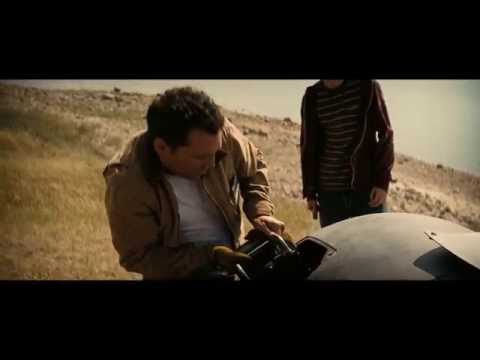
Interstellar depicts a future in which Earth is being destroyed by crop blight and famine, and a group of astronauts sets out through space to find a new home for humanity. Christopher Nolan wrote the screenplay with his brother Jonathan, and the theoretical physicist Kip Thorne was the scientific consultant and executive producer. The film won an Oscar for visual effects. Why watch: large-scale science fiction shot on film, including in the IMAX 70 mm format.
The Martian
 Official trailer · “The Martian” (2015)
The Martian is based on Andy Weir’s 2011 novel. Astronaut Mark Watney (Matt Damon) is left alone on Mars and has to survive while NASA looks for a way to bring him back to Earth. About 20 sets were built in Budapest, and the exterior scenes were shot in the Wadi Rum desert in Jordan. The film received seven Oscar nominations. Why watch: a survival story from the director of Alien, but this time the hero fights not a creature but the conditions on the planet.
Hidden Figures
 Official trailer · “Hidden Figures” (2016)
Hidden Figures tells of three African American women who worked as mathematicians at NASA during the space race of the 1950s and 1960s: Katherine Johnson (Taraji P. Henson), Dorothy Vaughan (Octavia Spencer) and Mary Jackson (Janelle Monáe). The film is loosely based on a book by Margot Lee Shetterly, so some events in it have been changed. It received three Oscar nominations, including Best Picture. Why watch: the space race through the eyes of those who worked on the calculations rather than in the cockpit.
First Man
 Official trailer · “First Man” (2018)
First Man is a biographical drama about Neil Armstrong (Ryan Gosling) in the years before the Apollo 11 flight to the Moon in 1969; his wife is played by Claire Foy. The film is based on James R. Hansen’s 2005 biography, and at the 91st Academy Awards it received four nominations and won for visual effects. Why watch: the space race seen through the price paid by Armstrong himself, his family and his colleagues.
WALL-E
 Official trailer · “WALL-E” (2008)
WALL-E is a Pixar animated film about a lonely robot assigned to clean up trash on an abandoned Earth. There he meets a robot named EVE, sent from the spaceship Axiom, falls in love and follows her across the galaxy. There is almost no dialogue in the opening scenes: the characters communicate through body language and sounds. The film won the Oscar for Best Animated Feature. Why watch: the only animated film in the selection. For more animation, see our overview of the best animated films for the whole family.
Project Hail Mary
 Official trailer · “Project Hail Mary” (2026)
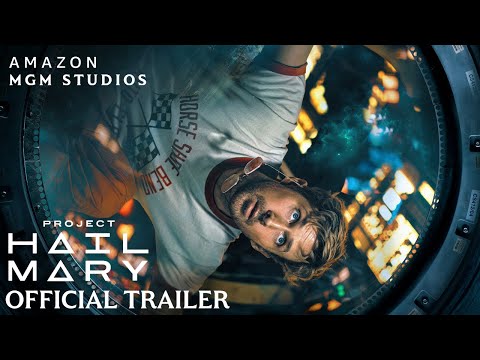
Project Hail Mary is based on Andy Weir’s 2021 novel. Schoolteacher Ryland Grace (Ryan Gosling) wakes up aboard an interstellar spacecraft and does not remember how he got there. The screenplay was written by Drew Goddard, and the scenes inside the ship, the Hail Mary, were shot on a real, built set. The film premiered in London on March 9, 2026, and was released in the US on March 20. Why watch: the newest film in the selection and another story from the author of The Martian.
How we chose
We took films that are already out, have detailed Wikipedia pages and show space in different ways: through real missions, survival, long journeys, the silence of a station or the horror genre. This is not a ranking: we do not invent our own ratings or compare box office, and we take English titles from English Wikipedia.
What to choose by mood
| What you want | What to pick |
|---|---|
| Real missions and real people | Apollo 13, Hidden Figures, First Man |
| Survival | Gravity, The Martian, Project Hail Mary |
| Science fiction about long journeys | 2001: A Space Odyssey, Interstellar |
| A quiet, intimate story | Moon, Contact |
| Horror on a ship | Alien |
| Animation | WALL-E |
For more science fiction, see the selection “Science Fiction Classics Worth Knowing”.
Tip. For a first evening, pick “Apollo 13” or “The Martian”: these are stories about solving problems when there is no way out. And save “2001: A Space Odyssey”, where there is little dialogue and the long scenes play out to music, for a calmer evening.
Frequently asked questions
Where to start if you haven’t watched space films before?
Start with Apollo 13 or The Martian: the first tells of a real mission from 1970, the second of survival on Mars, based on Andy Weir’s novel.
Which of these films are based on real events?
Apollo 13 recreates the 1970 mission, First Man tells of Neil Armstrong and the Apollo 11 flight of 1969, and Hidden Figures is loosely based on a book about real women mathematicians at NASA, so some events in it have been changed.
Which film in the selection is the newest?
Project Hail Mary (2026): it premiered in London on March 9, 2026, and was released in the US on March 20.
Where can I watch these films?
Streaming catalogs change, so we do not list them. Check the page of the film you want on a service available to you.
Sources
- Apollo 13 (film) (Wikipedia)
- Interstellar (film) (Wikipedia)
- Gravity (2013 film) (Wikipedia)
- The Martian (film) (Wikipedia)
- Project Hail Mary (film) (Wikipedia)
Data was checked against Wikipedia on October 19, 2026.


Discussion